
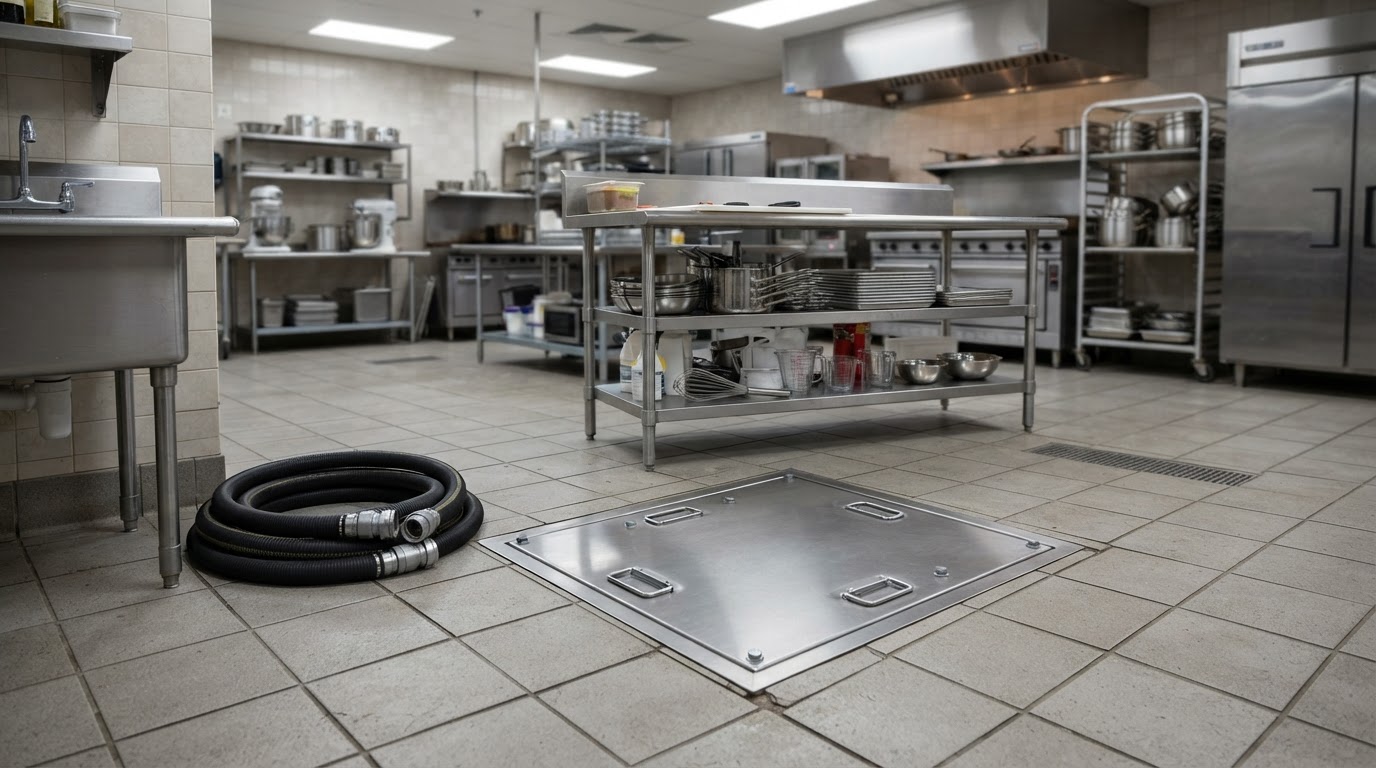
Why Keeping Your Restaurant's Grease Trap Clean Matters
A clean grease trap keeps your restaurant running — what it does, the real cost of skipping service, warning signs, and how to set a cleaning schedule that fits your kitchen in Miami-Dade and Broward.
Why a Clean Grease Trap Is Essential for Your Restaurant
A grease trap exists for one reason: to stop fats, oils, and grease from leaving your kitchen and clogging the drains and sewer lines your business depends on. When that trap is kept clean, your kitchen runs, your drains stay clear, and you avoid the kind of backup that shuts down service during a Friday dinner rush. When it is ignored, the same grease that builds up inside the trap builds up downstream — and the cost of ignoring it is almost always higher than the cost of maintaining it. For restaurants and food-service businesses across Miami-Dade and Broward counties, a clean grease trap is not a cosmetic detail; it is part of keeping the doors open.
This article explains what a grease trap actually does, what happens when it fills up, the warning signs to watch for, how a cleaning visit works, and how to set a maintenance schedule that fits your kitchen's volume — without inventing prices or guarantees. The goal is to help you understand the service so you can ask better questions and make a decision that fits how your kitchen actually operates.
What a Grease Trap Actually Does (and What Happens When It Fills Up)
Every time a kitchen drains a pot, runs a prep sink, or cleans a fryer, warm fats and oils flow with the wastewater. As that water cools, the grease solidifies. A grease trap is designed to slow the flow enough that the grease has time to separate and float, while the cleaner water continues on to the sewer line. The trap collects the grease instead of letting it pass through.
That collection is the whole point — and it is also the reason the trap eventually needs service. A grease trap does not destroy grease; it stores it. As the grease layer thickens, the trap has less capacity to separate new grease from new water. Eventually the grease takes up enough of the trap that the water carries grease straight through, downstream into the pipes your restaurant shares with every other tenant on the line.
Once grease is downstream, it cools, hardens, and narrows the pipe. That is how a single neglected trap turns into slow drains, backups at the three-compartment sink, odors that drift into the dining room, and in the worst case, a sewage backup that closes the kitchen and triggers a health inspection. The failure rarely happens all at once — it builds the same way the grease builds, slowly and then suddenly.
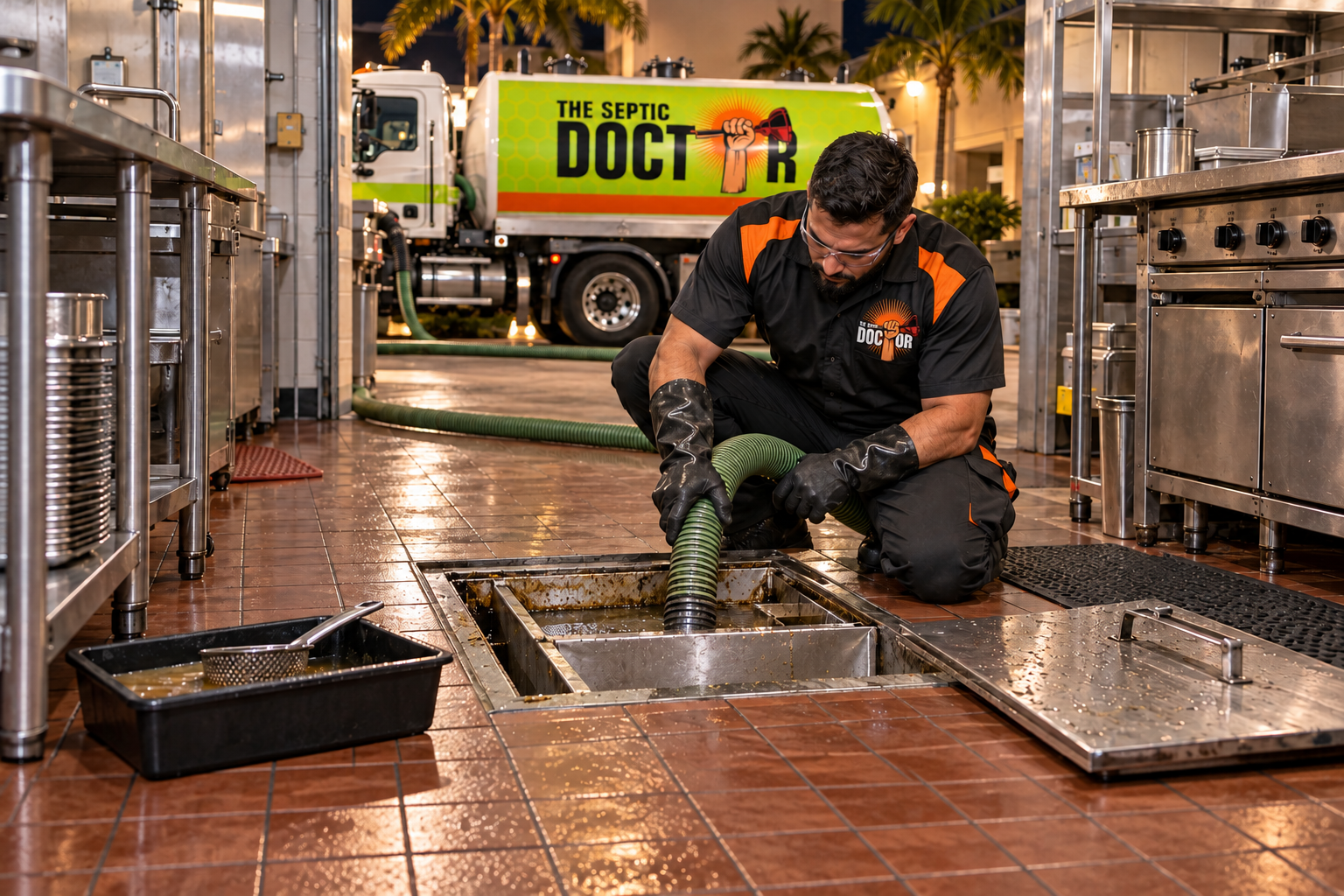
The Interior Components That Make It Work
Inside most grease traps you will find an inlet, an outlet, and one or more baffles that force the water to slow down and change direction. That change of direction is what gives grease time to separate. When the trap is clean, these components do their job quietly. When the trap is full, grease coats the baffles, shortens the path the water takes, and the separation stops working long before the trap looks full from the outside.
This is why a trap that 'looks fine' can still be failing. The working parts are hidden under the grease. A grease trap cleaning that only skims the top layer is not the same as a full service that removes the accumulated solids from the bottom and clears the baffles — and the difference matters when your kitchen depends on the drain staying open.
The Real Cost of Skipping Grease Trap Service
The clearest way to understand grease trap maintenance is to compare what a routine cleaning prevents against what a neglected trap eventually costs. The trade-off is not 'service versus no expense' — it is 'planned service versus unplanned emergency.' A clean trap is cheap insurance against a backup that arrives on its own schedule, usually during a rush.
The Septic Doctor does not publish flat prices for grease trap cleaning because the scope depends on trap size, access, how full it is, and the volume your kitchen produces. An honest estimate comes from describing your setup and the service you need — not from a generic number that changes once a technician arrives. What you can control is the timing: scheduled service costs less and disrupts less than a backup that closes a station or a night.
- Planned cleaning: scheduled around your hours, known scope, keeps the kitchen running.
- Neglected trap: backups arrive on their own schedule, usually during a rush, and cost lost service plus an emergency callout.
- Downstream repair: once grease hardens in the line, clearing it can require hydro jetting or pipe work a regular pump-out would have prevented.
- Health and permitting risk: an overflowing or odor-producing trap is the kind of issue a health inspector flags, and it can affect your ability to keep operating.
Signs Your Grease Trap Needs Attention Now
You do not need to open the trap to know it needs service. A few observations tell you it is time to call. The most useful early signals are odor and slow drainage, because they tell you the trap is no longer keeping up with what the kitchen is sending through. A clean kitchen can still have a full trap, because the grease is hidden inside it.
When you notice any of the signs below, the right move is to schedule grease trap cleaning rather than waiting for a backup to make the decision for you. Backups always cost more than a planned visit — in money, in lost service, and in the cleanup that follows.
- Slow drains at the prep or three-compartment sink that are not explained by a single clog.
- Gurgling sounds from the drains when water flows.
- A sour or rancid odor near the trap, the floor drains, or the dish area.
- Grease or food residue backing up at the drain when the sink runs.
- The trap is past the interval your last service recommended, even if nothing looks wrong yet.
How a Routine Grease Trap Cleaning Visit Works
A grease trap cleaning visit is straightforward when it is routine and difficult when it has been delayed. The Septic Doctor approaches it as a service that fits around your kitchen, not a disruption to it. Most visits can be scheduled before opening or after the rush so the kitchen keeps running.
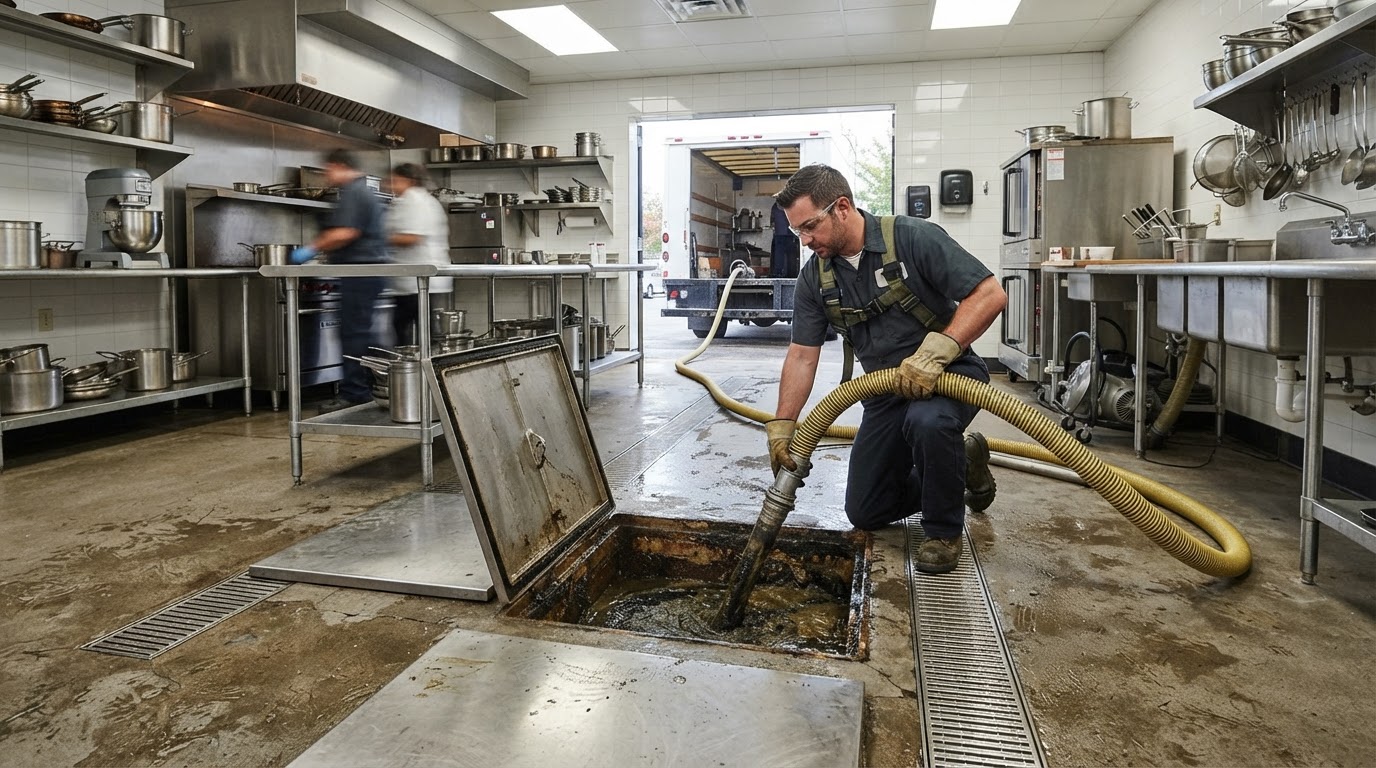
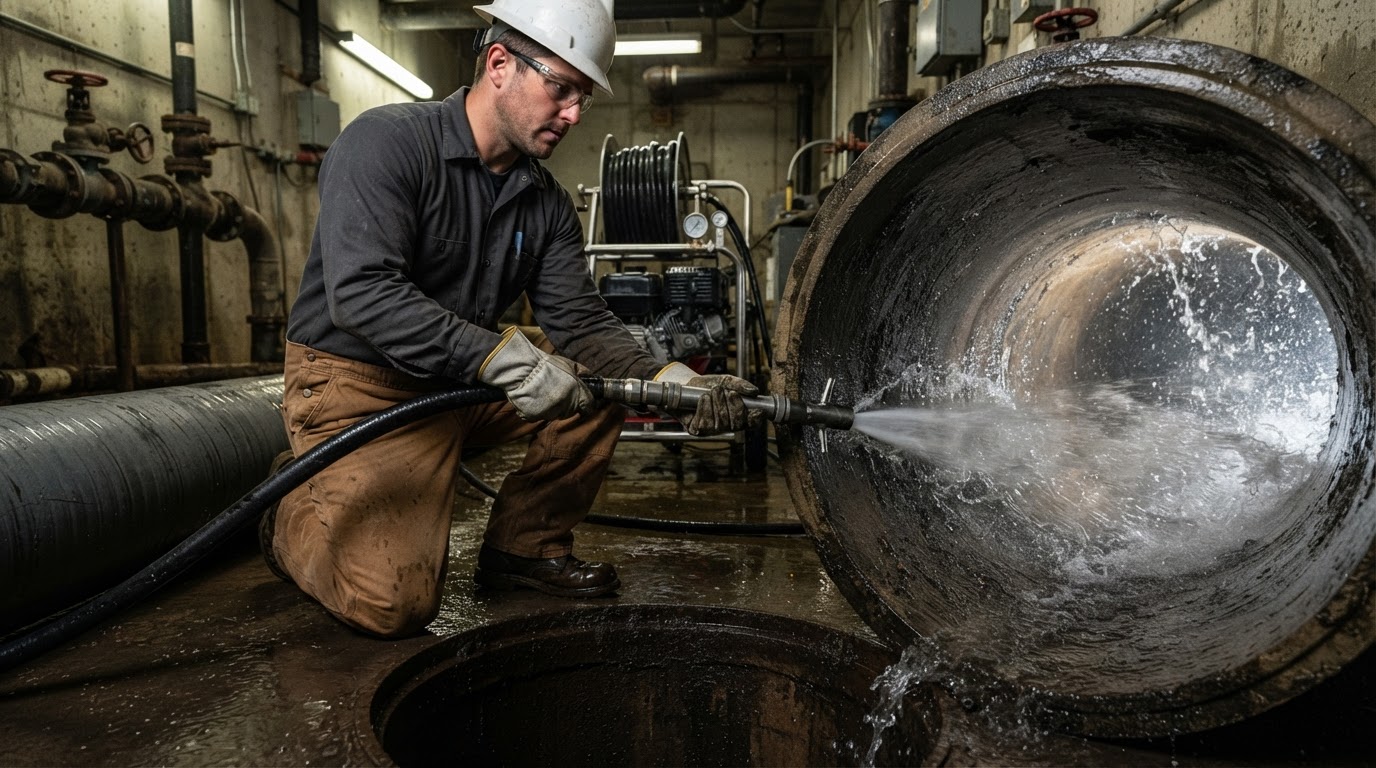
During a typical visit, the technician locates and opens the trap, removes the accumulated grease and solids, and checks that the inlet, outlet, and internal baffles are clear. The contents are removed and handled appropriately — not dumped back into a drain or onto the ground. Where the line downstream shows signs of grease buildup, a related service such as hydro jetting may be recommended, but only if the condition actually calls for it rather than as an upsell.
Before the technician arrives, it helps to share a few details: the trap's approximate size and location if you know it, when it was last serviced, the type of kitchen (quick-service, full restaurant, commissary), and what you have noticed. Keep the area around the trap accessible — move boxes, mats, or equipment that sit over the access lid. You do not need to pump the trap yourself or enter any confined space; that is the technician's job.
Building a Maintenance Schedule That Fits Your Kitchen
There is no single pumping interval that fits every restaurant. The right schedule depends on how much grease your kitchen produces, the size of the trap, and how heavily you cook. A high-volume fry kitchen fills a trap faster than a cold-prep café, and a small trap serving a busy line fills faster than a large one serving the same volume. The right answer is the one that matches your kitchen, not a generic calendar.
The practical approach is to start with the interval your last service suggested, watch how full the trap is at the next cleaning, and adjust. If the trap is more than about a quarter full of grease at the next service, shorten the interval. If it is nearly empty, you may be able to extend it. The goal is to pump before the trap loses its ability to separate — not after.
For commercial kitchens across Miami-Dade and Broward counties, The Septic Doctor can help you set a cycle based on your actual usage rather than a generic schedule. Keeping a short log of service dates also supports your records if a health inspector or landlord asks about your maintenance history.
Adjusting With the Seasons
Restaurants in South Florida often see volume swings — tourist season, events, and holiday catering can push a kitchen well past its usual output. When your volume rises, your grease output rises with it, and a schedule built for an average week can fall behind during a busy one. The simplest fix is to plan an extra cleaning before a known peak, or to check the trap halfway through a heavy stretch. It costs less than a backup during the week you can least afford to close.
Miami-Dade and Broward: Local Practices and Common Sense
Running a restaurant in South Florida means a warm climate, busy seasons, and kitchens that often run close to capacity. Grease behaves the same way everywhere it cools, but local conditions — shared sewer lines in multi-tenant plazas, storm-season water, and heavy tourist-season volume — make consistent maintenance more valuable, not less. A backup in a shared line can affect neighboring businesses, which turns a single neglected trap into a plaza-wide problem.
Some municipalities and utilities in Miami-Dade and Broward have expectations around grease management for food-service businesses, and a clean, maintained trap is the baseline that satisfies most of them. The Septic Doctor does not claim to guarantee any specific inspection outcome, but keeping the trap on a schedule is the simplest way to avoid the conditions that lead to a citation. If you are unsure whether your current interval is right, describing your kitchen and volume when you call is enough to get a recommendation.
Keep Your Kitchen Running — Request Grease Trap Service
A clean grease trap is one of the quietest ways to protect your restaurant's schedule, reputation, and plumbing budget. The Septic Doctor serves restaurants and food-service businesses throughout Miami-Dade and Broward counties, and the team is ready to help you stay ahead of backups instead of reacting to them. Call (954) 668-8975 or request service online to discuss your trap size, your kitchen's volume, and a schedule that fits how you cook.
If a line is already slow, the same call can cover related needs like drain cleaning to clear a clog or hydro jetting when a grease-packed line needs more than a pump-out. You can also ask about used cooking oil collection if your kitchen needs a pickup for fryer oil. The right service is the one that fits your kitchen — not the largest package.
Frequently Asked Questions
It depends on your kitchen's volume, the trap size, and how heavily you fry. A high-volume kitchen may need service every few weeks, while a lighter kitchen may go longer. The Septic Doctor helps you set a cycle based on how full the trap is at each visit, not a generic calendar.
A clean grease trap protects your restaurant's schedule, reputation, and plumbing budget. The Septic Doctor serves restaurants and food-service businesses throughout Miami-Dade and Broward counties. Call (954) 668-8975 or request service online to discuss your trap size, your kitchen's volume, and a schedule that fits how you cook.
Disclaimer: This article provides general educational information and does not replace a property-specific professional assessment. Service requirements, access, costs, and results depend on the system and site conditions.
Related service
Grease Trap Cleaning & Service