
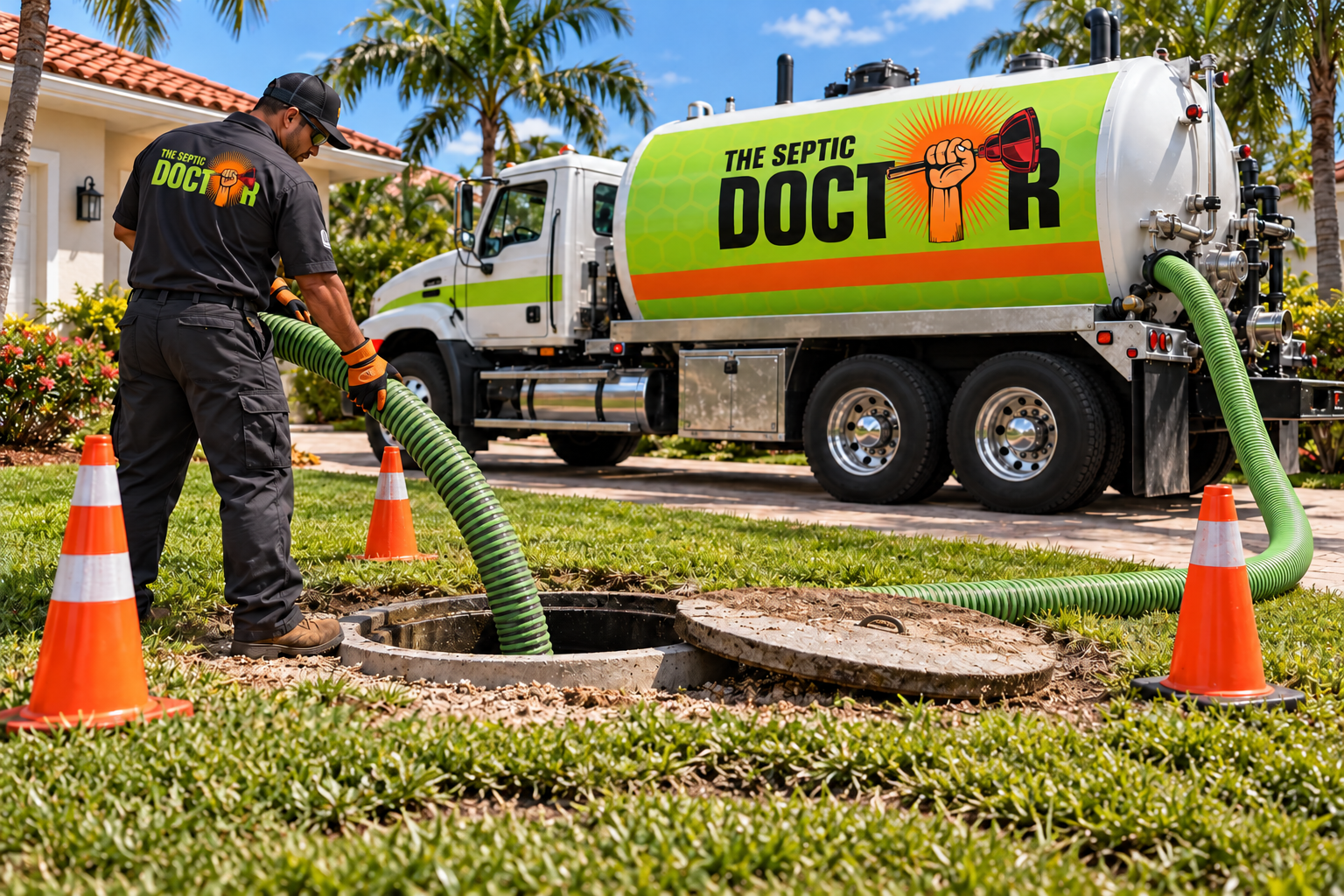
The Septic Doctor provides septic tank pumping and pump-outs for residential and commercial customers across Miami-Dade and Broward counties. Pumping removes the accumulated solids, scum, and liquid that build up over time so the tank can keep separating and sending treated liquid to the drain field. To request service, call (954) 668-8975 or use the request form on our contact page and tell us your city and the service you need.
What septic tank pumping includes
Septic tank pumping is the core of keeping an onsite system working. Every day a household or business sends water into the system, solids settle to the bottom of the tank as sludge and lighter material floats to the top as scum. The middle layer of partially treated liquid flows out to the drain field for final treatment in the soil. Over time, the sludge and scum layers grow and shrink the space the tank has to do its work. Pumping removes those accumulated layers so the tank can keep separating and the liquid can keep flowing as it should.
A pump-out with The Septic Doctor includes locating and opening the tank access, pumping out the solids, scum, and liquid, a visual check of the tank's general condition, and a clean, professional cleanup of the work area before we leave. We work with both residential septic systems and commercial tanks, and we serve customers across Miami-Dade and Broward counties. When you call, we can talk through what your system needs based on how long it has been since the last service and what you are noticing.
- ✓Locating and opening the tank access
- ✓Pumping out solids, scum, and liquid
- ✓A visual check of the tank's general condition
- ✓Clean, professional cleanup of the work area
Signs you may need a pump-out
Septic systems usually give signs before a small issue becomes a larger one. Recognizing those signs helps you call for service in time and avoid backups or damage to the drain field. The most common reason to pump is simply that enough time has passed since the last service, but several symptoms can tell you the tank may be due.
Slow drains throughout the home, gurgling sounds from plumbing, and unpleasant odors indoors or in the yard are common indicators. None of these alone guarantees the tank is full, but together they are a good reason to schedule service. If it has been several years since the last pump-out, it is reasonable to schedule one even without symptoms, because a tank can be near capacity before it shows any outward sign.
- ✓It has been several years since the last pump-out
- ✓Slow drains or gurgling sounds from plumbing
- ✓A scheduled maintenance cycle is coming due
- ✓After heavy household use or extended guests
- ✓Odors indoors or near the tank area
Who this service is suitable for
Pumping is appropriate for any property with a septic tank, whether it is a single-family home, a multi-family property, or a small commercial site with its own onsite system. Homeowners benefit from routine pump-outs as part of staying ahead of problems, while commercial property owners often schedule service around their operating needs.
If you are unsure whether your property is on septic, we can talk through what to look for when you call. Pumping is one of the most common and straightforward septic services, and it is the right first step for most systems that have not been serviced in a long time.
How the pumping process works
The process begins when you contact us. We confirm the service, talk through your situation, and schedule a visit. On the day of service, the technician locates the tank and opens the access. If you know where the tank lids are, sharing that in advance helps the visit go quickly; if not, the technician can locate them.
Once the tank is open, the contents are pumped out into our service truck. During the process the technician can see the general condition of the tank and note anything worth flagging, such as a damaged lid or an unusually high scum layer. After the tank is emptied, the work area is cleaned up. Before we leave, we share a brief note about what we observed so you have a record of the visit.
- ✓We confirm the service and schedule a visit
- ✓The technician locates the tank and pumps it out
- ✓A brief condition note is shared with you
- ✓We clean up before we leave
How to prepare and what to expect
A little preparation helps the visit go smoothly. If you know where the tank access is, clear the area around it by moving vehicles, patio furniture, or yard items that could block the work. Make a note of anything you have noticed — slow drains, odors, or when the tank was last serviced — because the more detail you can share, the better we can help.
Keep pets inside and let household members know someone will be working in the yard. After the service, the work area is cleaned up and we share any notes about the tank's condition. There is no special cleanup required on your part after we leave.
Pumping versus cleaning and maintenance
Pumping, cleaning, and maintenance are related but distinct services, and understanding the difference helps you request the right one. Pumping removes the contents of the tank — the solids, scum, and liquid. It is the service most homes need on a recurring basis. Cleaning goes a step further by addressing stubborn residue on the interior surfaces that a basic pump-out may leave behind, and it is often appropriate for a tank that has not been serviced in a long time.
Maintenance is broader. A maintenance visit can include pumping or cleaning as appropriate, plus a visual check of accessible components and notes on anything to watch going forward. If you are unsure which service fits your situation, we can help you decide when you call. See our septic tank cleaning and septic system maintenance pages for more on those services.
How often a tank should be pumped
There is no single answer for every home. The right pumping schedule depends on the size of the tank, how many people live in the home, and how much water the household uses. A common guideline is to have the tank pumped every few years, but larger households and smaller tanks fill faster and may need more frequent service.
The table below gives a general sense of how household size and tank capacity relate, but it is a starting point rather than a rule. The best schedule for your property depends on your actual usage, and we can help you think through it when you request service.
| Tank size | Suggested pumping interval (general) | Notes |
|---|---|---|
| Smaller tanks | More frequent | Fill faster with larger households |
| Mid-size tanks | Every few years | Common for many single-family homes |
| Larger tanks | Less frequent | Depends on actual water usage |
Benefits, limitations, and important considerations
Routine pumping helps the tank do its job and supports the rest of the system, including the drain field. By removing accumulated solids before they reach a level where they can carry over into the drain field, pumping helps protect that part of the system, which is more involved and costly to address.
It is important to understand what pumping cannot do. Pumping will not repair a failing drain field, fix a broken pipe, or resolve a problem caused by tree roots or a collapsed component. If slow drains persist after a pump-out, the cause may lie elsewhere in the system, and an assessment can help identify it. We do not promise that pumping will resolve every septic problem; we will tell you honestly what we see and what we recommend.
Maintenance and follow-up care
After a pump-out, a few simple habits help the system keep working between services. Conserve water where possible, since the system depends on having room to separate and treat what flows in. Spread laundry and heavy water use across the week rather than all at once, and avoid flushing anything besides waste and toilet paper.
Keep a record of when the tank was pumped and any notes from the visit. That makes it easier to plan the next service and gives useful context if a problem comes up later. If you notice changes after the pump-out — persistent slow drains, odors, or wet areas near the drain field — contact us so we can take a look.
Local considerations and confirmed coverage
The Septic Doctor serves customers across Miami-Dade and Broward counties. South Florida's high water table, flat terrain, and seasonal heavy rainfall can affect how an onsite system behaves, and properties near the coast or in low-lying areas may see different patterns than those inland. When you request service, mentioning your city helps us understand the local context.
We describe Miami-Dade and Broward as our service areas and do not maintain a branch office in every city we serve. You can learn more about specific areas on our Miami-Dade and Broward service-area pages.
Why customers contact The Septic Doctor
Customers reach out to The Septic Doctor for straightforward, dependable help with septic pumping across South Florida. We focus on clear communication — confirming the service, talking through your situation, and sharing what we find. When you call, you speak with a team that wants to understand your needs and match the service to them.
We do not invent years in business, customer counts, or guarantees. What we offer is honest service and a clear explanation of what your system needs. If you are due for a pump-out or have noticed signs that the tank may be full, request service and we will help you take the next step.
Service area links
Frequently asked questions
It depends on tank size and household use. Many homes benefit from pumping every few years, but larger households and smaller tanks fill faster and may need more frequent service. We can help you decide based on your situation when you call.
Request Septic Tank Pumping & Pump-Outs
Serving Miami-Dade & Broward